Wednesday, April 8, 2026

The future of Critical Care Transport is here, and it's no longer just about speed. 🚨


Recent advancements in inter-hospital transport of critically ill patients (2023–2025) emphasize a shift from simple "speed of transit" to "quality of en route care," facilitated by specialized teams, AI-driven prognostic tools, and secure real-time data integration.

Actionable Summary for the Physician[1]

  • Specialized Retrieval Teams: Prioritize the use of dedicated critical care transport (CCT) or mobile ECMO teams over general EMS. Recent evidence confirms that specialized teams significantly reduce adverse events and improve 28-day survival.

  • AI-Driven Risk Stratification: Utilize the ECMO PAL (Predictive Algorithm) for VA-ECMO candidates. This deep neural network outperformed traditional scores (SAVE, ACCEPTS) in predicting in-hospital mortality during international validation in 2023.[2]

  • Technological Integration: New blockchain-based platforms (e.g., ITC-InfoChain) are emerging to provide secure, real-time EHR data sharing between centers, addressing traditional interoperability delays.[2][1]

  • Protocol Shift: Current guidelines (ANZCA 2024/2025) de-emphasize the "golden hour" for non-trauma transfers, instead advocating for exhaustive pre-transport stabilization and the maintenance of ICU-level monitoring (capnography, invasive BP) throughout the journey.[1]

  • End-of-Life Transfers: New 2025 guidelines (Intensive Care Society) now provide structured frameworks for transferring critically ill patients to their preferred place of death (home or hospice), acknowledging patient autonomy in terminal transport.[1]


Detailed Clinical Insights and Guidelines[1]

1. Specialized Mobile ECMO Services

The use of portable ECMO for inter-hospital transport has transitioned from "rescue-only" to a standard referral pathway.

  • Safety and Efficacy: A 2024 retrospective analysis of 303 ECMO patients (MedNexus/2024) found that transported patients had 28-day survival rates (72.1%) comparable to or higher than non-transported patients, provided transport was performed by a specialized technical team using standardized protocols.

  • AI Prognostication (ECMO PAL): Developed in 2023 by Monash University and validated on 18,167 patients from the ELSO registry, ECMO PAL uses a deep neural network to predict survival. It achieved a sensitivity of 82.1% for in-hospital mortality, significantly surpassing the SAVE score. This tool is now recommended to assist in the complex decision-making of whether to initiate mobile ECMO for transfer.[1][2]

2. Updated Professional Guidelines (2024–2025)

Several major societies have released updated standards for inter-hospital transport:

  • **ANZCA/CICM/ACEM **: The PG52 Guideline emphasizes "minimal delays" but prioritizes the "one-call" activation system and the use of telemedicine for real-time advice from receiving consultants. It mandates that transport personnel must have competencies equivalent to the environment the patient is leaving.

  • Intensive Care Society (ICS) / FICM (2024/2025): Updated guidance highlights the "joint responsibility" of the referring and receiving consultants. A critical new addition is the 2025 Guidance on Transfer to Preferred Place of Death, which addresses the logistics and ethics of transporting critically ill, non-survivable patients.

  • Indian Society of Critical Care Medicine (ISCCM/2025): Their latest position statement reinforces the requirement for a minimum of two escorts (one being a physician trained in airway management) for all unstable inter-hospital moves.[1]

3. Digital and Blockchain Advancements

Data fragmentation during transport has historically led to clinical errors.

  • **ITC-InfoChain **: This blockchain-based digital health platform was successfully piloted in 2024 to solve EHR interoperability issues. It allows paramedics and receiving ICUs to access and update patient data in real-time (average transaction time of 3.1 seconds) without compromising data privacy.

  • Tele-ICU Integration: Telemedicine is no longer just for the bedside; 2025 updates show it is being used to provide remote supervision of medical trainees during bedside procedures before transport and to offer specialist oversight of the transport team en route.

4. Monitoring and Equipment Standards

  • Continuity of Care: Current standards (SCCM/FICM 2025) mandate that there must be "no hiatus in monitoring." This includes mandatory continuous ECG, pulse oximetry, non-invasive or invasive blood pressure, and, critically, end-tidal CO2 (capnography) for all ventilated patients.

  • Transport-Specific Equipment: Guidelines now emphasize that all monitors must be adapted for transport (e.g., specific battery life requirements, alarm visibility in high-noise environments) and that medications (vasopressors, sedatives) should be managed via dedicated transport pumps to prevent dosing interruptions during the move.[1]

References (2)

[1]

ECMO PAL: using deep neural networks for survival prediction in venoarterial extracorporeal membrane oxygenation.

Stephens AF; Å eman M; Diehl A; Pilcher D; Barbaro RP; Brodie D; Pellegrino V; Kaye DM; Gregory SD; Hodgson C

Intensive care medicine

2023-09

Q1H-index: 24624 citations

[2]

ECMO PAL: using deep neural networks for survival prediction in venoarterial extracorporeal membrane oxygenation

Andrew F. Stephens; Michael Å eman; Arne Diehl; David Pilcher; Ryan P. Barbaro; Daniel Brodie; Vincent Pellegrino; David M. Kaye; Shaun D. Gregory; Carol Hodgson

Intensive Care Medicine

2023

Q1H-index: 24624 citations


Saturday, March 7, 2026

Every emergency call begins with a single decision — someone must run toward danger while everyone else steps away.

Every emergency call begins with a single decision — someone must run toward danger while everyone else steps away.


Paramedics, emergency physicians, nurses, firefighters, and police officers work in environments defined by uncertainty: highways at midnight, violent scenes, infectious risks, emotional trauma, and relentless physical strain.

Yet one critical question is rarely asked:

Who protects the protectors?

First responder safety is not merely an occupational concern. It is a system responsibility. When responders are unsafe, exhausted, injured, or psychologically overwhelmed, the entire emergency care chain becomes fragile.

Protecting first responders requires more than PPE and protocols. It demands a culture of safety, structured training, psychological support, violence prevention, and leadership accountability.

In this article, I explore the major safety challenges faced by first responders — from scene hazards and infection exposure to psychological injury and workplace violence — and discuss how healthcare systems must evolve to protect those who stand at the front line of crisis.

Because when we protect the protectors, we strengthen the safety of our entire community.

#EmergencyMedicine #FirstResponders #HealthcareSafety #PatientSafety #EMS #HealthcareLeadership

Thursday, March 5, 2026

Critical communications in ER

Critical communications  in ER 

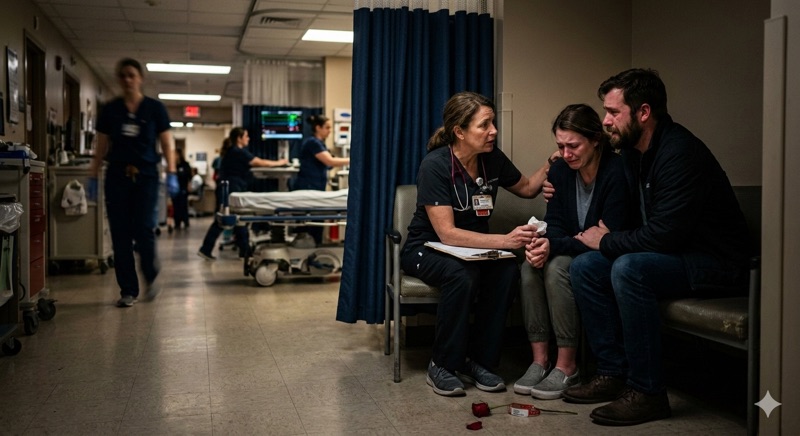
Effective communication in the Emergency Department (ED) regarding bad news and death declarations requires a shift from euphemistic language to direct, empathetic clarity. The GRIEV_ING protocol is the ED-specific standard, prioritizing the "Gathering" of family and "Identifying" oneself and the deceased before "Educating" on the events leading to death. Always use the words "dead" or "died" to prevent cognitive dissonance. For sudden death, immediate notification is essential, while termination of resuscitation (TOR) should ideally involve family presence if feasible, as this facilitates the grieving process and reduces post-traumatic stress.

Clinical Review: Communication and Death Declaration in the ER

1. Frameworks for Breaking Bad News (BBN)

While the SPIKES protocol is widely used in oncology, the GRIEV_ING protocol, developed by Hobgood et al. (2005, updated 2013) and adopted by the Society for Academic Emergency Medicine (SAEM), is specifically tailored for the abrupt nature of ED deaths.

  • G (Gather): Ensure all appropriate family members are present in a private, quiet space.
  • R (Resources): Mobilize support systems immediately (social work, chaplaincy, or additional family).
  • I (Identify): Identify yourself, your role, the patient by name, and the state of the family's knowledge.
  • E (Educate): Briefly describe the events leading up to the arrival or the resuscitative efforts in the ED.
  • V (Verify): State clearly that the patient has died. Avoid phrases like "passed away," "left us," or "expired."
  • _ (Space/Silence): Allow for the "emotional impact" of the news; do not rush to the next step.
  • I (Inquire): Ask if there are immediate questions.
  • N (Nuts and Bolts): Discuss organ donation (via OPO), funeral home arrangements, and the need for an autopsy or medical examiner (ME) involvement.
  • G (Give): Provide a business card or contact information for follow-up questions.

2. Communication Nuances and Linguistic Clarity

A 2023 study by Orlandini et al. highlights that the use of euphemisms in the ER often leads to "incomplete comprehension," where family members may believe the patient is in a coma or a deep sleep.

  • The "D-Words": Physicians must use "dead," "died," or "death." These terms provide the cognitive closure necessary to begin the grieving process.
  • The Warning Shot: Before delivering the final news, provide a brief preparatory statement (e.g., "I have very difficult news to share").
  • Non-Verbal Communication: Maintain eye level, avoid physical barriers (like a desk), and use "therapeutic touch" only if culturally appropriate and welcomed.

3. Family Presence During Resuscitation (FPDR)

Current guidelines from the American Heart Association (AHA) and the Emergency Nurses Association (ENA) support FPDR when a dedicated staff member (chaperone) can remain with the family to explain the interventions.

  • Clinical Insight: Families who witness resuscitative efforts often report a more "natural" transition to the death declaration because they have visual evidence that "everything was done."
  • Contraindications: FPDR should be avoided if the family is highly disruptive or if the resuscitation involves forensic evidence collection (e.g., violent crime).

4. Procedural Declaration and Legal Requirements

The clinical declaration of death in the ED involves a systematic physical exam followed by administrative duties.

  • Physical Verification:
    • Absence of central pulses (carotid/femoral).
    • Absence of heart sounds for a full 60 seconds.
    • Absence of spontaneous respiratory effort.
    • Fixed, dilated pupils.
    • Check for "The Lazarus Phenomenon" (autoresuscitation); current literature suggests observing the patient for 5–10 minutes after stopping CPR before final declaration.
  • Medical Examiner (ME)/Coroner Cases: In most jurisdictions, any death occurring within 24 hours of hospital admission or resulting from trauma/violence must be reported. Physicians must not remove lines (ET tubes, IVs, catheters) in ME cases to preserve evidence.
  • Organ Donation: Federal Law (CMS) requires hospitals to notify the local Organ Procurement Organization (OPO) for every death. Physicians should not approach the family about organ donation themselves but should facilitate the introduction of an OPO coordinator to avoid a perceived conflict of interest.

5. Termination of Resuscitation (TOR) Communication

When communicating the decision to stop CPR, the physician should frame the decision as a clinical "limit of medicine" rather than asking the family for permission.

  • Example Phrasing: "We have used all the medications and procedures available to restart your father's heart, but unfortunately, his body is not responding. At this point, additional efforts will not be successful, and I am going to stop the resuscitation."
  • Psychological Impact: This relieves the family of the "guilt of the decision," placing the burden on the clinical futility of the situation (Abramson et al., 2024).

6. Post-Mortem Care and Physician Wellness

Recent literature (2024) emphasizes the "Pause"—a 30–60 second moment of silence in the trauma bay after a death declaration to honor the patient and allow the team to recalibrate. This practice has been shown to mitigate moral injury and secondary traumatic stress among ER staff.

7. Counseling/Debriefing Room Protocol

It is recommended to always use a quiet, calm environment for communication. Ideally, the room should feature sofas or lounge chairs with no table placed between the parties to foster openness.

These rooms may be equipped with audio-visual recording capabilities. Bystanders and participants must be informed that the session is being recorded and that the footage will be kept strictly confidential. Clear signage regarding recording must also be displayed vividly on the wall. These records are essential for future medicolegal purposes.


Tuesday, February 24, 2026

The Silent Crisis on Kerala’s Roads: Why We Need a "Low-Cost" Revolution in Trauma Training


The Silent Crisis on Kerala’s Roads: Why We Need a "Low-Cost" Revolution in Trauma Training

Every year, nearly 5,000 families in Kerala are shattered by road traffic fatalities. But the tragedy doesn’t end with the death toll. For every person lost, more than six others are left with life-altering permanent disabilities. This is not just a statistic; it is a public health emergency that demands a shift in how we approach the Golden Hour.

The Competency Gap in the Emergency Room

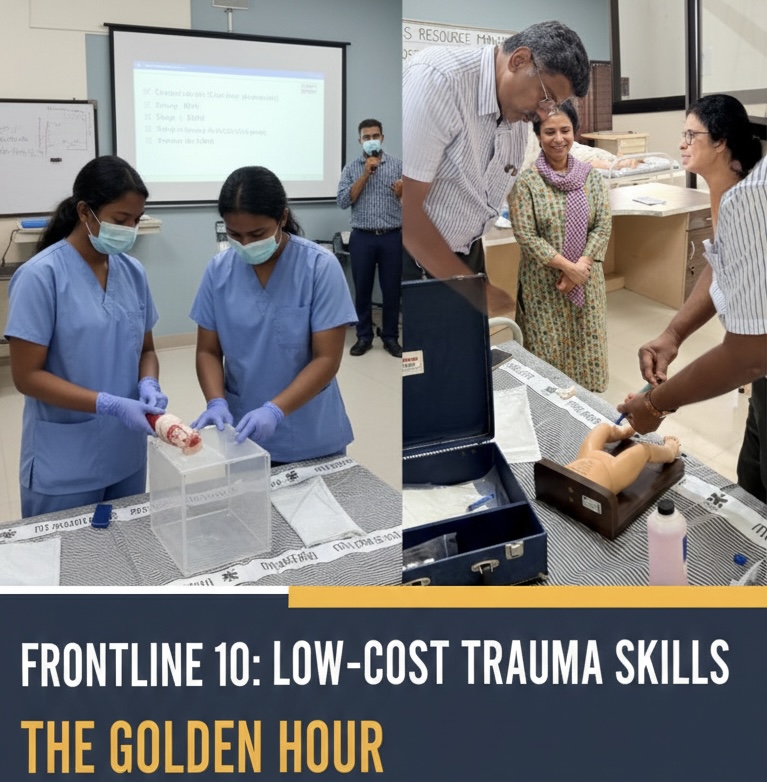
While India has made incredible strides with structured programs like Advanced Trauma Life Support (ATLS), we face a pragmatic hurdle: Accessibility and Cost. ATLS is the gold standard for a uniform trauma language, yet its high cost often prevents the very people at the frontlines—Interns, Junior Residents (JRs), and General Duty Medical Officers (GDMOs)—from getting certified. In the chaos of a poly-trauma case, enthusiasm isn't enough; we need skill-based, algorithmic muscle memory.

A Call for the "10 Basic Skills"

To bridge the gap between high-end certification and zero training, we must advocate for a low-cost, high-impact skill training model. We can save critical patients if every frontline doctor is proficient in these 10 core competencies:

1. Airway Management: Basic maneuvers and definitive airway.

2. Cervical Spine Protection: Proper immobilization techniques.

3. Needle Decompression: Identifying and relieving tension pneumothorax.

4. Intercostal Drain (ICD) Insertion: Managing hemothorax/pneumothorax.

5. Tourniquet & Pressure Packing: Aggressive external hemorrhage control.

6. Pelvic Binding: Stabilizing suspected pelvic fractures to prevent occult bleeding.

7. FAST Exam: Focused Assessment with Sonography for Trauma.

8. Splinting: Proper immobilization of long bone fractures.

9. Fluid Resuscitation: Balanced resuscitation and shock management.

10. Log Rolling & Secondary Survey: Ensuring no injury is missed during stabilization.

The Trauma Chain of Survival

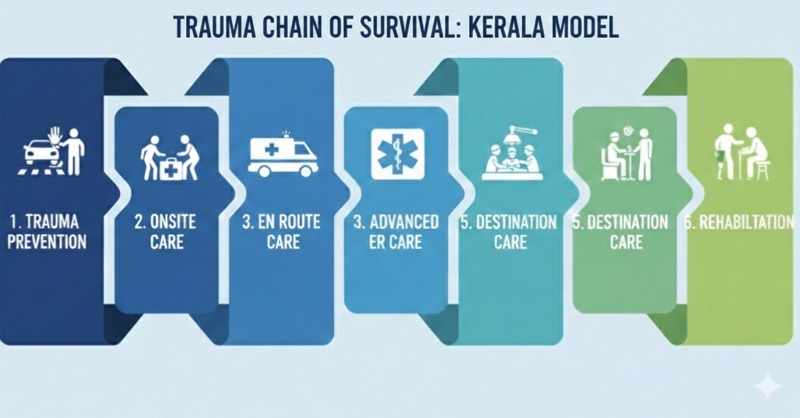
Saving a life isn't a single event; it’s a chain. If one link fails, the patient loses. To reduce Kerala’s morbidity and mortality rates, we must strengthen every link in the Trauma Chain of Survival:

Trauma Prevention: Education and stricter enforcement of road safety laws.

Onsite Care: Bystander training and basic life support.

En Route Care: Moving beyond "ambulance-as-a-taxi" to Critical Transport with trained paramedics.

Advanced ER Care: Skill-based resuscitation by trained JRs and GDMOs.

Destination Care: Rapid access to OTs, ICUs, and neurosurgical intervention.

Rehabilitation: Returning the patient to a functional life.

The Bottom Line

We don't just need more doctors; we need trauma-ready doctors. By democratizing trauma skills through low-cost, hands-on workshops, we can ensure that a patient’s survival doesn't depend on which hospital they reach, but on the competence of the first hands that touch them.

Let’s turn the "Golden Hour" into a "Hour of Certainty" for every citizen in Kerala.

#TraumaCare #KeralaHealth #MedicalEducation #RoadSafety #PublicHealth #ATLS #EmergencyMedicine #GoldenHour


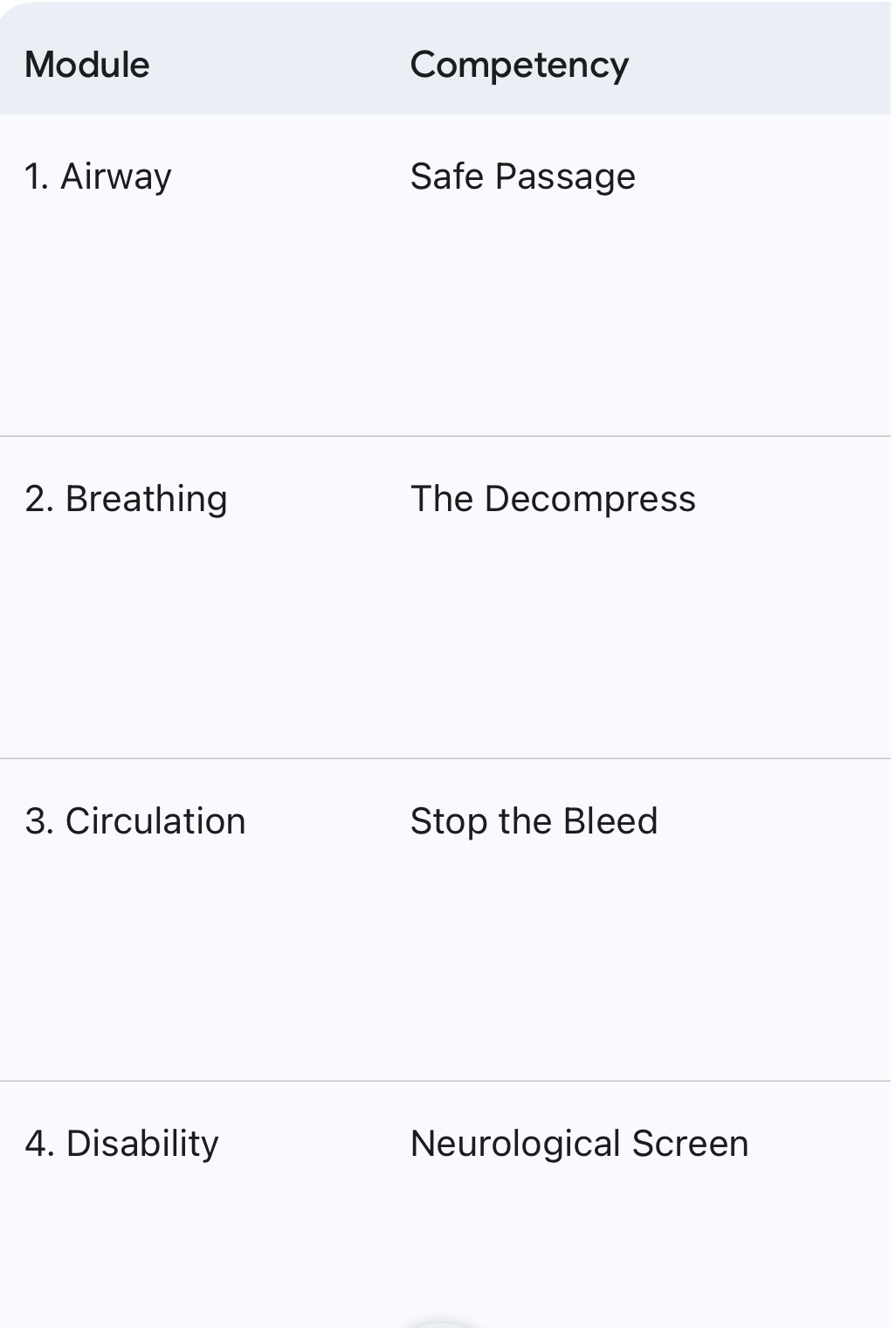
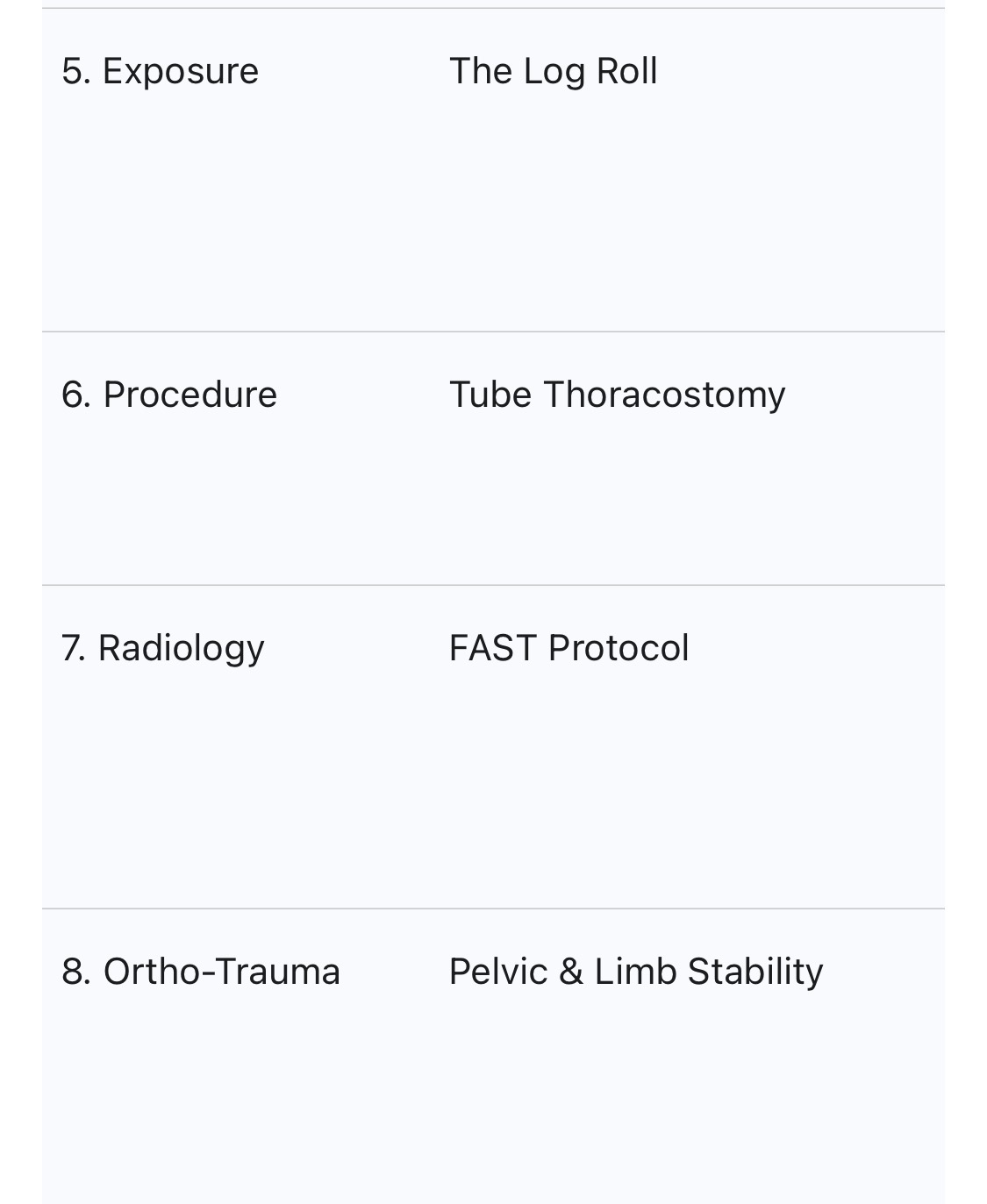
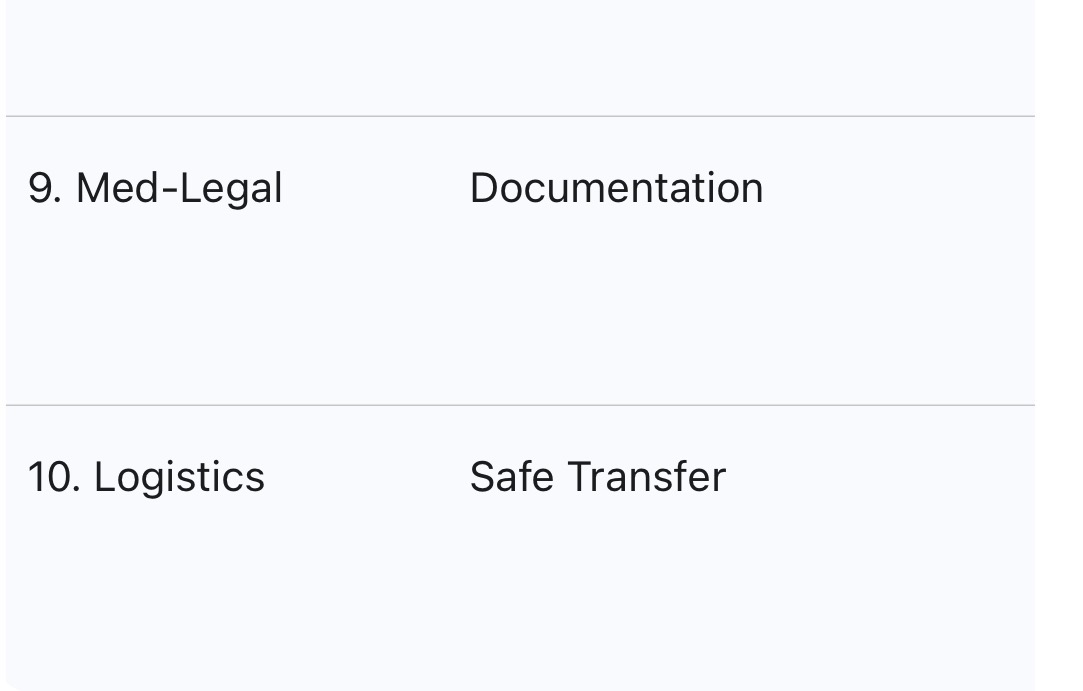
Model for a low cost training 


Part 1: The "Frontline 10" Training Syllabus

Objective: To transition Interns, JRs, and GDMOs from theoretical knowledge to procedural competence within a 1-day (8-hour) intensive workshop.


Part 2: The "Low-Cost" Simulation Lab (The DIY Kit)

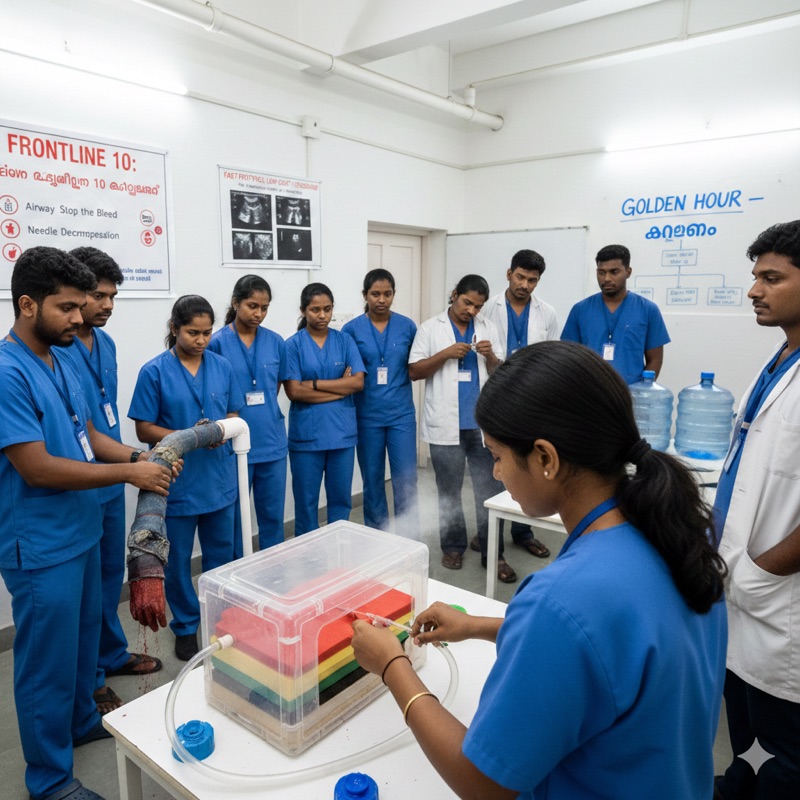
You don’t need million-dollar mannequins to teach life-saving skills. Here is how to build a high-fidelity lab on a budget:

1. The "Chest Wall" (For ICD/Needle Decompression)

Materials: A plastic crate or wooden frame covered with layers of foam (muscle), a layer of heavy-duty plastic (pleura), and a thick rubber sheet (skin).

Cost-Saving: Use a simple bicycle inner tube filled with air under the "skin" to simulate the "hiss" of a tension pneumothorax when a needle is inserted.

2. The "Bleeding Limb" (For Tourniquets/Packing)

Materials: PVC pipes padded with upholstery foam and covered in old leggings/denim.

Realism: Use a hand-pumped sprayer filled with red-dyed water connected to a tube inside the foam to simulate arterial spurting.

3. The "Pelvic Simulator"

Materials: Two plastic gallon jugs taped together to represent the iliac crests.

Lesson: Teaches the "Inward and Downward" pressure technique and how to wrap a bedsheet binder tightly at the level of the greater trochanters.

4. FAST Exam Training

Materials: Use a live volunteer (a student) and a basic portable ultrasound machine.

Tip: If no ultrasound is available, use high-resolution printed "positive/negative" FAST images for a rapid-fire quiz to build visual recognition.


The future of Critical Care Transport is here, and it's no longer just about speed. 🚨

  Recent advancements in inter-hospital transport of critically ill patients (2023–2025) emphasize a shift from simple "speed of transi...